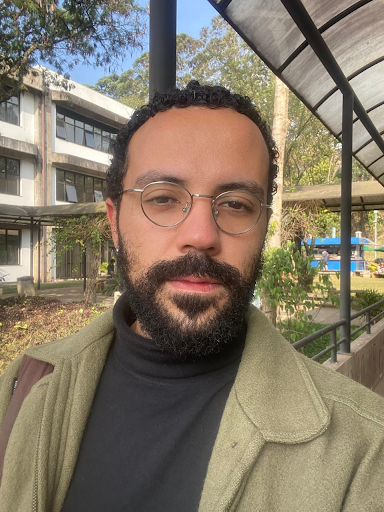
Nikolai Veresov

Professor of cultural-historical psychology
School of Education, Culture and society, Faculty of Education,
Monash University, Australia
Nikolai.veresov(at)monash.edu
orcid.org/: 0000-0001-8714-7467
Scopus Author ID: 56001334600
Background
Nikolai Veresov is Professor of cultural-historical psychology at the Faculty of Education, Monash University. He got his first PhD degree in Moscow in 1990, and second PhD was obtained in the University of Oulu (Finland) in 1998. His areas of interest are development in the early years, cultural-historical theory and research methodology. He published 5 books and over 130 articles/book chapters available in 9 languages. Nikolai edited several books and special issues, he is the Editor-in-Chief of “Culture and Education” international journal, and co-editor of two Springer book series: “Perspectives in cultural-historical research” and “Early Childhood Research and Education: an inter-theoretical focus”
International collaboration
- Member of Cultural-Historical Psychology and Education Research Virtual Lab, Monash University, Melbourne (Australia)
- Honorary research fellow at University of Pedagogy and psychology
- Academic member of UNESCO Chair for early childhood education and care
- International Society for cultural-historical and activity research (ISCAR) – member of the Executive committee and Australian-Asian regional representative (2017-2021)
- International member of American psychological Association (APA)
Key publications
Books
Veresov, N., Kewalramani, S., Ma, J. (2024). Child development within contexts: Cultural-historical research and educational practice. Springer
Filipi, A., Davidson, C., Veresov, N. (2023). Conversation Analysis and a Cultural-Historical Approach. Comparing Research Perspectives on Children’s Storytellings. Palgrave MacMillan
https://doi.org/10.1007/978-3-031-31941-9
Veresov, N. (1999). Undiscovered Vygotsky. Etudes on the pre-history of cultural- historical psychology. Peter Lang Publishers
Articles/chapters
Veresov, N. (2025). Historical, theoretical and methodological foundations of CHAT: Critical deliberations. Integrative Psychological and Behavioral Science, 59:8 https://doi.org/10.1007/s12124-024-09870-8
Veresov, N. (2024). The problem of data analysis in cultural-historical research. Cultural-historical psychology, 20(3), 77-86.
Veresov, N., Veraksa, N. (2024). Introducing cultural-historical genetic-analytical model for studying child’s play: the matryoshka principle – situations within situations covered by situations. Early years, DOI: 10.1080/09575146.2024.2365180
Veresov, N. (2023). Cultural-historical research methodology for studying of child’s development: concepts and principles. Psicologia Da Educacao, 54, 96-106
Veraksa, N., Veresov, N. & Sukhikh, V. (2022): The play matrix: a tool for assessing role-play in early childhood, International Journal of Early Years Education, Published online: 14 Jan 2022 DOI: 10.1080/09669760.2022.2025582
Kostogriz, A., & Veresov, N. (2021). The zone of proximal development and diversity. In Oxford Research Encyclopedia of Oxford Research Encyclopedia of Education. Oxford University Press. doi: https://doi.org/10.1093/acrefore/9780190264093.013.1542
Veresov, N. (2019). Subjectivity and perezhivanie: empirical and methodological challenges and opportunities. In F. Gonzalez Rey, A. Mitjans Martinez, D. Goulart (Eds.). Subjectivity within Cultural-Historical Approach (pp. 61-86). Springer.
Fleer, M., Veresov, N. (2018). A cultural-historical methodology for researching early childhood education. In M. Fleer, B. van Oers (Eds.), International Handbook of Early Childhood Education, Springer International Handbooks of Education, Vol. 1, pp. 225-250 DOI 10.1007/978-94-024-0927-7_9
Fleer, M., Veresov, N. (2018). Cultural-historical and activity theories informing early childhood education. In M. Fleer, B. van Oers (Eds.), International Handbook of Early Childhood Education, Springer International Handbooks of Education, Vol. 1, pp. 47-76 DOI 10.1007/978-94-024-0927-7_3
Veresov, N. (2017). The concept of perezhivanie in cultural-historical theory: content and contexts. In: Fleer et al. (eds), Perezhivanie, emotions and subjectivity: advancing Vygotsky legacy (pp 47-70). New York: Springer.
Veresov, N. (2017). ZBR and ZPD: is there a difference? Cultural-historical psychology, 13 (1) 23-36. doi: 10.17759/chp.2017130102
https://psyjournals.ru/files/86703/kip_2017_n1_Veresov.pdf
Veresov, N. (2016). Perezhivanie as a phenomenon and a concept: questions on clarification and methodological meditations. Cultural-Historical Psychology, 12 (3), 129-148. doi: 10.17759/chp.2016120308 http://psyjournals.ru/en/kip/2016/n3/veresov.shtml
Veresov, N. & Fleer, M. (2016). Perezhivanie as a theoretical concept for researching young children’s development. Mind, Culture and Activity, 23, (4), 325-335 DOI: 10.1080/10749039.2016.1186198 http://www.tandfonline.com/doi/full/10.1080/10749039.2016.1186198
Veresov, N. (2014). Refocusing the lens on development: Towards genetic research methodology. In M. Fleer and A. Ridgway (eds.), Visual Methodologies and Digital Tools for Researching with Young Children (pp. 129-149). Springer.
Veresov, N. (2014). Method, methodology and methodological thinking. In M. Fleer and A. Ridgway (eds.), Visual Methodologies and Digital Tools for Researching with Young Children (pp. 215-228). Springer.
Veresov, N. (2010). Introducing cultural-historical theory: main concepts and principles of genetic research methodology. Cultural-historical psychology, 4, p. 83-90.
Selected publications by Nikolai on languages other than English
Veraksa, N., Veraksa, A, Veresov, N., Sobkin, V. (2025). Problema diagnostiki v kulturno-istoricheskom kontekste [The problem of the diagnostics in the cultural-historical context]. Klinicheskaya I spetsialnaya psihologiya, 14(1), 5-18 (In Russian)
Veresov, N. (2024). Problema analiza dannyh v kulturno-istorichaskom issledovanii [The problem of data analysis in cultural-historical research]. Cultural-historical psychology, 20(3), 77-86 (in Russian)
Veresov, N. (2024). Istoriya razvitiya kulturno-istoricheskoi teorii I ee sovremennoe vospriatie: otvety na voprosy I voprosy k otvetam. Vestnik MGU: Seriya Psihologiya, 47 (4), 223-255 (in Russian)
Veraksa, N, & Veresov, N. (2022). La investigacién sobre el pensamiento dialéctico en la primera infancia. In N. Veraksa & S. Sheridan (eds.), Las investigaciones actualessobre las teorías de Vygotskyen Educación Infantil (pp.3-21). Routledge (In Spanish)
Veresov, N. (2022). Chto nam delat s bolshoi kotolevskoi pechatiu: Novaya realnost v nasledii Vygotskogo [Discovering the Great Royal Seal: New Reality of Vygotsky’s Legacy ] In A. Maidansky (Ed.), Kultureno-istoricheskaya psihologiya: istoki I Novaya realnost (pp. 112-140). Kanin Plus (in Russian)
Veresov, N. (2017). Zona blizaishego razvitiya I zone of proximal development: est li raznitsa? [ZBR and ZPD: Is there a difference?]. Cultural-historical psychology, 13 (1), 23-36 (In Russian and English).
Veresov, N. (2016). Perezhivaniye kak psichologicheskii fenomen I teoreticheskoye poniatie: utochniaushie voprosy i metodologicheskie meditatsii [Perezhivanie as a Phenomenon and a Concept: Questions on Clarification and Methodological Meditations]. Cultural-historical psychology, 12(3), 129-148 (In Russian).
Veresov, N. (2015). Experimentalno-geneticheskii metod b psihologiya soznaniya: v poiskah utrachennogo (statia vtoraya) [Experimental-genetic method and psychology of consciousness: in search of the lost (Part Two). Cultural-Historical Psychology, 11 (1), 117 – 126 (In Russian)
Veresov, N. (2014). Experimentalno-geneticheskii metod b psihologiya soznaniya: v poiskah utrachennogo (statia vtoraya) [Experimental-genetic method and psychology of consciousness: in search of the lost (Part One)]. Cultural-Historical Psychology, 10 (4), 121 – 130 (In Russian)
Veresov, N. (2014). Emotions, perezhivanie et developpement culturel: le projet inacheve de Lev Vygotski (Human emotions, perezhivanie, and cultural development: the unfinished project of Lev Vygotsky). In Moro, C. & Muller Mirza, N. (eds.). Semiotique, Culture et Developpement Psychologique (Semiotics, Cultural and Psychological Development). (pp. 209 – 235) France: Presses Universitaires du Septentrion, (in French)
Veresov, N. (2012). Znaczenie teorii kulturowo-historycznej dla edukacji rozważania na temat uczeniasię, rozwoju, działalności i kreatywności [The importance of cultural-historical theory of education: Reflections on learning, development, business and creativity]. Forum Oswiatowe, 1, 46, p 141-156. (In Polish)
Veresov, N (2009). Developing world – “developing school – “developing child: possible response on challenges to educational institutions. In M. Elhammoumi (Ed.). Psychology in Arabic world: challenges and responses, (p. 48 -58) (in English and Arabic).
Veresov, N (2008). Kehityksen dimensioanaalinen maili. In Aili Helenius & Riitta Korhonen (Eds.) Pedagogiikan palikat. WSOY, p. 25-32 (in Finnish).
Veresov, N (2008). Some brief results. In Ponnikas, Mustonen, Korhonen, Aldea-Partanen, Veresov (Eds.) Maahanmuuttaj at osana kainuulaista – Ulkomaalaisvaeston tyoelamavalmiudet ja koulutustarpeet. Kainuun maakunta – kuntayhtyma (in Finnish).
Veresov, N. (2005). Kulttuurin ymmartamisen mahdollisuuksista ja keinoista: loogis-filosofinen nakukulma. S. Verigin & N. Veresov (Eds.). Kieli-historia-kulttuuri. Yazyk-Istoria-Kultura. (pp. 8-22), Oulun Yliopisto, (In Russian with Finnish abstract).
Hakkarainen, P., Veresov, N. (1998). Leikki, mielekkyys ja lapsen kehitys[ Play, meaning and child development]. Kasvatus. The Finnish Journal of Education, 5, 452 – 462 (in Finnish).