Irina Engeness
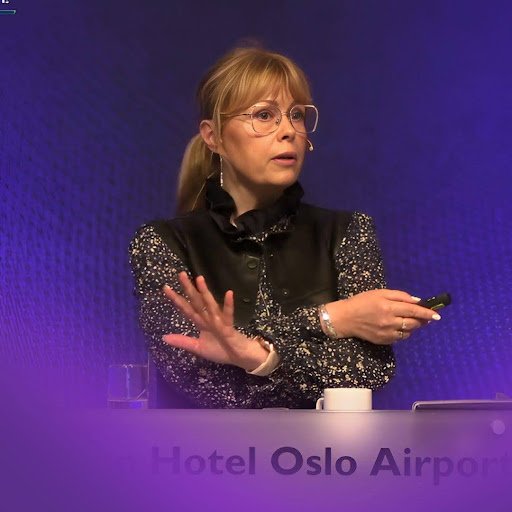
Professor of Education,
Østfold University of Applied Sciences (HiØ), Norway
Contact:
irina.engeness@hiof.no
+47 480 78 749
ORCID: 0000-0001-5948-4992
Research objective / profile
Irina Engeness’ research is positioned at the intersection of Artificial Intelligence in Education (AIED), assessment for learning, technology-mediated learning, and the development of students’ writing in English, anchored in cultural-historical theory and related socio-cultural perspectives. A central objective of her work is to design, develop, and study pedagogical AI environments that support learning processes, especially the writing process—through personalised and formative feedback, and to examine how such tools shape learner agency, conceptual development, and teachers’ pedagogical practices.
In recent years, her research has increasingly focused on generative AI and AI chatbots in educational settings, addressing their role in online learning, digital agency development, and the design of AI-driven feedback systems as cultural tools that mediate learning.
Academic qualifications and career
Engeness holds a PhD from the University of Oslo (2013–2017) and has steadily progressed through academic roles to full professorship at Østfold University of Applied Sciences (from 2020). Her career also includes substantial educational leadership (Dean of the Faculty of Teacher Education and Languages, 2020–2024) and earlier professional experience in school leadership and teaching.
Research leadership, projects, and academic service
She has demonstrated strong research leadership as project lead for major externally funded initiatives, including:
- AI-EXCAfL (2025–2029): Artificial Intelligence for Enhanced Cross-disciplinary Assessment for Learning (Norwegian Research Council)
- Commercialisation Project Qualification (2025–2026): AI-driven essay assessment technology for teaching and learning (Norwegian Research Council)
- AI4AfL (2021–2026): Artificial Intelligence for Assessment for Learning to improve learning and teaching in the 21st century (Norwegian Research Council)
Her academic service includes peer review for leading conferences and journals, external examining (including PhD thesis examination), and extensive supervision at PhD and Master levels.
Key contributions and publication profile
Engeness has developed a coherent and cumulative body of work on learning with digital tools, evolving into a strong, contemporary research agenda on AI-supported writing and feedback. Her recent publications (2024–2025) address:
- cultural-historical design principles for pedagogical AI supporting student writing,
- AI-driven feedback as a mediating cultural tool in the writing process,
- the role of AI chatbots in online learning and digital agency, and
- teachers’ facilitation of writing with automated feedback and peer feedback.
In addition, she has made a significant scholarly contribution through her editorial and authorship work on P. Y. Galperin and the cultural-historical tradition (including multiple chapters and edited volumes with Springer), strengthening the theoretical foundations that inform her applied and design-oriented AIED research.
Best Paper Award:
Engeness, I. (2021). Developing teachers’ digital identity: towards the pedagogic design principles of digital environments to enhance students’ learning in the 21st century. European Journal of Teacher Education, 44(1), 96-114.
Recent publications
- Engeness, I. (2025). Exploring AI-generated feedback in peer-discussion contexts: A mixed-methods study of essay writing in secondary classrooms. Computers and Education: Artificial Intelligence, 100504. https://doi.org/10.1016/j.caeai.2025.100504
- Engeness, I. Cultural-Historical Perspective to Design Pedagogical AI for Enhancing Student Writing. Tech Know Learn (2025). https://doi.org/10.1007/s10758-025-09876-0
- Engeness, I., Nohr, M., & Fossland, T. (2025). Investigating AI Chatbots’ Role in Online Learning and Digital Agency Development. Education Sciences, 15(6), 674. https://doi.org/10.3390/educsci15060674
- Engeness, I. & Gamlem, S. (2025). Exploring AI-Driven Feedback as a Cultural Tool: A Cultural-Historical Perspective on Design of AI Environments to Support Students’ Writing Process, Integrative Psychological and Behavioral Science; DOI: 10.1007/s12124-025-09894-8
- Segaran, M., Engeness, I., & Gamlem, S. M. (2025). Lower secondary school teachers facilitation of students’ writing process: a study of automated feedback and peer feedback approaches. Computer Assisted Language Learning, 1–26. https://doi.org/10.1080/09588221.2025.2539154
- Engeness, I., Nohr, M., & Fossland, T. (2025, juni 28). AI Chatbots for Educators: Transforming Online Learning in Higher Education. Ninth European MOOCs stakeholders Summit 2025 (EMOOCS 2025), Telecom Paris, 19 Pl. Marguerite Perey, 91120 Palaiseau, FRANCE. https://doi.org/10.5281/zenodo.15763926
- Engeness, Irina; Kunna Segaran, Meerita & Krange, Ingeborg Hognestad (2024). Learning to write in English: Development of conceptual understanding in the writing process with feedback from artificial intelligence and collaborating peers. I Skulstad, Aud Solbjørg (Red.), Current issues in English Teaching . Fagbokforlaget. ISSN 9788245047189.
- Engeness, I. (2023). P. Y. Galperin’s Psychological Significance and Difference Between Tool Use by Humans and Animals, Psychological Significance and Difference Between Tools Use by Humans and Animals. Springer. ISSN 9783031149283. doi: 10.1007/978-3-031-14929-0.
- Thomas, G. L. & Engeness, I. (2023). P. Y. Galperin’s Psychological Significance and Difference Between Tool Use by Humans and Animals: Implications for Research and Practice in Psychological Significance and Difference Between Tools Use by Humans and Animals. Springer. ISSN 9783031149283. doi: 10.1007/978-3-031-14929-0.
- Engeness, I. & Thomas, G. L. (2023). Human Consciousness as a Reflection of Human Practical Activity in Psychological Significance and Difference Between Tools Use by Humans and Animals. Springer. ISSN 9783031149283. doi: 10.1007/978-3-031-14929-0_5.
- Engeness, I. & Thomas, G. L. (2023). Tool Mediated Operations and the Development of Human Consciousness, in Psychological Significance and Difference Between Tools Use by Humans and Animals. Springer. ISSN 9783031149283. doi: 10.1007/978-3-031-14929-0_4.
- Engeness, I. & Thomas, G. L. (2023). Manual and Tool Mediated Operations, in Psychological Significance and Difference Between Tools Use by Humans and Animals. Springer. ISSN 9783031149283. doi: 10.1007/978-3-031-14929-0_3.
- Engeness, I. & Thomas, G. L. (2023). The Empirical Research, in Psychological Significance and Difference Between Tools Use by Humans and Animals. Springer. ISSN 9783031149283. doi: 10.1007/978-3-031-14929-0_2.
- Engeness, I. & Thomas, G. L. (2023). Psychological Difference Between Human and Animal Tools, in Psychological Significance and Difference Between Tools Use by Humans and Animals. Springer. ISSN 9783031149283. doi: 10.1007/978-3-031-14929-0_1.
- Krange, I., Segaran, M., Gamlem, S., Moltudal, S., & Engeness, I. (2023). A Triple Challenge: Students’ Identification, Interpretation, and Use of Individualized Automated Feedback in Learning to Write English as a Foreign Language. Interaction Design & Architecture(s) Journal. 59, pp. 37-66. DOI: 10.55612/s-5002-059-001
- Engeness, I., & Nohr, M. (2022, December). Assessment as Learning. In Forum Oświatowe (Vol. 35, No. 2 (68), pp. 31-52). University of Lower Silesia.
- Brynildsen, S.; Nagel, I. & Engeness, I. (2022). Teachers’ Perspectives on Enhancing Professional Digital Competence by Participating in TeachMeets. Italian Journal of Educational Technology. ISSN 2532-4632. 30(2), s. 45–63. doi: 10.17471/2499-4324/1252.
- Engeness, I. (2021). Tools and signs in massive open online courses: Implications for learning and design. Human Development, 65(4), 221-233.
- Nagel, I. & Engeness, I. (2021). Peer Feedback with Video Annotation to Promote Student Teachers’ Reflections. Acta Didactica Norden (ADNO). ISSN 2535-8219. 15(3), s. 1–24. doi: 10.5617/ADNO.8192.
- Thomas, G. L.; Bailey, J. & Engeness, I. (2021). Scaffolding athlete learning in preparation for competition: what matters. Sports Coaching Review. ISSN 2164-0629. doi: 10.1080/21640629.2021.1991713.
- Engeness, I. (2021). PY Galperin’s Development of Human Mental Activity. Lectures in Educational Psychology. Springer Nature.
- Engeness, I. (2021). Developing teachers’ digital identity: towards the pedagogic design principles of digital environments to enhance students’ learning in the 21st century. European Journal of Teacher Education, 44(1), 96-114.
- Engeness, I., & Nohr, M. (2020). Engagement in Learning in the Massive Open Online Course: Implications for Epistemic Practices and Development of Transformative Digital Agency with Pre-and In-Service Teachers in Norway. Cultural-Historical Psychology, 16(3), 71-82.
- Guest Editor for the Special Issue on Galperin in Learning, Culture and Social Interaction; Learning, Culture and Social Interaction | Special issue on Galperin | ScienceDirect.com by Elsevier
- Engeness, I. (2021). The Development of Mental Actions and the Orienting Basis of Actions. In I. Engeness (Ed.) PY Galperin’s Development of Human Mental Activity (pp. 1-17). Chapter 1. Springer, Cham.
- Engeness, I. (2021). The Phases of the Development of Mental Actions. In I. Engeness (Ed.) PY Galperin’s Development of Human Mental Activity (pp. 19-31). Chapter 2. Springer, Cham.
- Engeness, I. (2021). The Conditions for the Development of the Properties of the Action. The Phases of the Development of the Action. In I. Engeness (Ed.) PY Galperin’s Development of Human Mental Activity (pp. 33-46). Chapter 3. Springer, Cham.
- Engeness, I. (2021). The Process of Internalisation. Theoretical and Practical Implications of the Study on the Phases of the Development of Mental Actions. In I. Engeness (Ed.) PY Galperin’s Development of Human Mental Activity (pp. 47-63). Chapter 4. Springer, Cham.
- Engeness, I. (2021). Psychological Grounds of the Development of Ideal Actions and Concepts. In I. Engeness (Ed.) PY Galperin’s Development of Human Mental Activity (pp. 65-74). Chapter 5. Springer, Cham.
- Engeness, Irina (2021). Development of Sensory Images. In P.Y. Galperin’s Development of Human Mental Activity. Springer Nature. ISBN 978-3-030-64022-4. Chapter 6. s 75 – 83
- Engeness, Irina (2021). Development of Physical Actions. In P.Y. Galperin’s Development of Human Mental Activity. Springer Nature. ISBN 978-3-030-64022-4. Chapter 7. s 85 – 95
- Engeness, I. (2021). Psychological Grounds of the Process of Automation. In PY Galperin’s Development of Human Mental Activity (pp. 97-103). Chapter 8. Springer, Cham.
- Engeness, I., Thomas, G. L., & Podolskiy, A. (2021). Demands and Realities: Significance and Implications of Galperin’s Legacy for Learning and Teaching in 21st Century. In I. Engeness (Ed.) PY Galperin’s Development of Human Mental Activity. Lectures in Educational Psychology. ISBN 978-3-030-64022-4. Back Matter. s 105 – 121Springer Nature.
- Engeness, I. (2021). Devoted to the Matter of Science: The Life and Professional Career of Piotr Galperin. In I. Engeness (Ed.) P.Y. Galperin’s Development of Human Mental Activity. Springer Nature. ISBN 978-3-030-64022-4. Front Matter.
- Engeness, I. & Zavershneva, E. (2021). Freedom as a Pursuit in Human Development: P.Y. Galperin on the Historical Psychology of L. S. Vygotsky. In I. Engeness (Ed.) P.Y. Galperin’s Development of Human Mental Activity. Springer Nature. ISBN 978-3-030-64022-4. Front Matter.
- Engeness, I., Nohr, M., Singh, A. B., & Mørch, A. (2020). Use of videos in the ICTMOOC: insights for learning and development of transformative digital agency with pre- and in-service teachers in Norway. Policy Futures in Education. DOI: 10.1177/1478210319895189
- Engeness, I. & Lund, A. (2020). The contribution of Piotr Galperin to the cultural-historical theory and implications for contemporary educational research and practice. Learning, Culture and Social Interaction. ISSN 2210-6561. doi:10.1016/j.lcsi.2019.01.005
- Engeness, I. (2020). Teacher facilitating of group learning in science with digital technology and insights into students’ agency in learning to learn. Research in Science & Technological Education, 38(1), 42-62.
- Engeness, I. & Nohr, M. (2019). Videos as teaching and learning resources for developing pre- and in-service teachers’ professional digital competence in the ICTMOOC. CEUR Workshop Proceedings. ISSN 1613-0073. 2356, s 128- 133
- Engeness, I., & Lund, A. (2018). Learning for the Future: Insights Arising from the Contributions of Piotr Galperin to the Cultural-Historical Theory. Learning, Culture and Social Interaction. https://doi.org/10.1016/j.lcsi.2018.11.004
- Mørch, A. I., Engeness, I., Cheng, V. C., Cheung, W. K., & Wong, K. C. (2017). EssayCritic: Writing to learn with a knowledge based design critiquing system. Educational Technology & Society, 20, p. 216–226. Retrieved from http://www.jstor.org/stable/90002176
- Engeness, I. (2018). Learning and Teaching with Digital Tools: Insights for Learning Arising from the Cultural – Historical Theory, Doctoral Thesis, University of Oslo
https://www.dropbox.com/s/4zevys8gkeur4y5/Engeness-PhD-2018.compressed.pdf?dl=0
- Engeness, I. (2018). What teachers do: facilitating the writing process with feedback from EssayCritic and collaborating peers. Technology, Pedagogy and Education, 27(3), 297-311.
- Engeness, I. & Edwards A. (2017). The Complexity of Learning: Exploring the Interplay of Different Mediational Means in Group Learning with Digital Tools. Scandinavian Journal of Educational Research 61(6), p. 650-667 doi:10.1080/00313831.2016.1173093
- Engeness, I., & Mørch, A. (2016). Developing Writing Skills in English Using Content-Specific Computer-Generated Feedback with EssayCritic. Nordic Journal of Digital Literacy, 11(2), p.118-135, DOI: 10.18261/issn.1891-943x-2016-02-03.
- Mørch, A. I., & Engeness, I. (2015). Læremidler og arbeidsformer i prosessorientert skriving. Retrieved from Utdanningsdirektoratet: http://www.udir.no/globalassets/upload/forskning/2015/rapport_8_engelsk_vgs_2015_04_30.pdf
- Furberg, A., Dolonen, J. A., Engeness, I. og Jessen, S. (2014). Læremidler og arbeidsformer i naturfag i ungdomsskolen.
Retrieved from Utdanningsdirektoratet: http://www.udir.no/globalassets/filer/tall-og- forskning/forskningsrapporter/laremidler-og-arbeidsformer-i-naturfag-i-ungdomskolen.pdf
Selected Conference Activity/Participation
Engeness, Irina (2025) Fra panikk til pedagogikk: Slik kan KI hjelpe elever å bli bedre skrivere. Fredrikstadsuka 2025, Litteraturhuset, Fredrikstad, 16.09.2025
Engeness, Irina (2025) AI and the Unsettling Shift in Education:
Are We Approaching a Tipping Point or a Transformational Change? Keynote Speaker at NORA.AI Conference. 2-3 June 2025, Halden, Norway
Engeness, Irina (2025) Leveraging Diverse Feedback for Enhanced Essay Writing: The Role of Teachers, AI, and Peer Support in Student Learning. World Federation of Associations of Teacher Education (WFATE) 8th Biennial Conference & Association for Teacher Education in Europe; 2025-05-27 – 2025-05-30
Engeness, Irina (2025). Kan KI brukes til hjelp for Vurdering for Læring (VfL)? Gjesteforelesning ved NMBU, 29.01.2025
Engeness, Irina (2024). Bedre tilbakemeldinger med KI. Keynote at Fagfokus Conference
Engeness, Irina (2024). Cultural-historical Perspective on Learning and Teaching in Online Environments and with AI; Salerno 2nd Forum of Educational Psychology
Grønn, Berit; Engeness, Irina; Jacobsen, Kjersti Berggraf; Hollmann, Martin & Goverud Andersson, Ola (2023). Nettbasert utdanningstilbud ved Fakultet for lærerutdanning og språk, Høgskolen i Østfold; UHR-lærerutdanning
Engeness, Irina & Nohr, Magnus (2023). Assessment as Learning: Norwegian Teachers’ Engagement with Reflection Videos in MOOCs to Enhance Learning and Digital Identity Among Pre- and In-Service Teachers in Norway. Teacher Education Conference, Halden, Norway
Engeness, Irina; Haugsbakken, Halvdan; Nohr, Magnus & Koch, Susanne Anette Kjekshus (2021). Kan nettkurs erstatte undervisning i sanntid? Hvilke vurderinger er i så fall viktige å ta?/Er MOOC død, lenge leve MOOC! Hvilken vei går nettundervisningen etter covid-19? Læringsfestivalen, 10-11.05.2021
Engeness, I. (2021). Tools and Signs in Learning with Technology: a Cultural-Historical Approach. Presented at Asia-Pacific Cultural-historical & Activity Research Summer School, Australia 19.01.2021
Engeness, I.; Nohr, M. (2020) Læring i IKTPED MOOC: Implikasjoner for epistemiske praksiser og utvikling av digitalt handlingsrom hos lærere og lærerstudenter ved Høgskolen i Østfold. Webinarfestivalen; 2020-11-23 – 2020-11-25
Engeness, I. (2020). Tools and Signs in Online Learning. SEVIC 2020 THE 1ST VIRTUAL INTERNATIONAL CONFERENCE ON SUSTAINABLE EDUCATION; 2020-12-11 – 2020-12-13
Engeness, I. (2020). Videos in the ICTMOOC as Resources for Learning and Development of Teacher Transformative Digital Agency. Presented at Webinar Muliggjørende teknologi, Østfold University College, 19 October, 2020.
Engeness, I. (2020). Tools and Signs in the Cultural-Historical Perspective: Implications for Education and Research. Presented at the International Webinar Conceptualising Trends in Digitalisation from the Cultural-Historical Perspective, 14 October 2020
Engeness, I., Nohr, M. (2019) Use of videos in ICTMOOC for teacher education and professional development in 21st century. Presented at eMOOCs Summit, Naples, Italy
Engeness, I., & Nagel, I. (2019). Orchestrating Group Learning in Science with Digital Animations and Insights into Agency in Learning to Learn at NERA 2019 Education in a Globalised World, 6-8 March, 2019, Uppsala, Sweden.
Engeness, I., & Nohr, M. (2019). Use of videos in ICTMOOC for teacher education and professional development in 21st century. Presented at ICDE Lillehammer Lifelong Learning Summit.
Engeness I., (2019). ‘Learning to Learn’ in Digital Environments: Design principles informed by Galperin’s concepts of orientation. Paper presented at Læring i det digitale samfunn, Seminar, Østfold University College, Halden, 17th January, 2019.
Engeness, I., (2016). Facilitating Learning to Write With EssayCritic and Collaborating Peers. Paper presented at the EARLI SIG Conference Reflective minds and communities Tartu, Estonia, August 28-29, 2016.
Engeness, I., & Mørch, A. I. (2016). The role of the teacher in facilitating writing process with peer feedback and automated feedback from EssayCritic. Paper presented at the International Symposium “Scientific school of L.S. Vygotsky: traditions & innovations” 24 -29. 06. 2016; Moscow, Russia http://psyjournals.ru/iscarschool2016/issue/issue.shtml
Engeness, I. (2015). The complexity of learning: exploring the interplay of different mediational means in CSCL setting. Paper presented at EARLI 2015 Conference; Limassol, Cyprus
Engeness, I., & Mørch, A. I. (2015). Development of English writing skills for upper secondary school students in Norway using computer-based scaffolding based on semantic analysis of text documents. Paper presented at 43rd Annual Congress of the Nordic Educational Research Association NERA, Gothenburg, Sweden
Engeness I. (2015). Exploring the interplay of various support forms in CSCL settings. Poster presented at CSCL 2015 Conference, Gothenburg, Sweden
Mørch, A. I., Engeness, I. EssayCritic Norway Trial 2014. Seminar/Prosjektmøte ved Hong Kong Baptist University